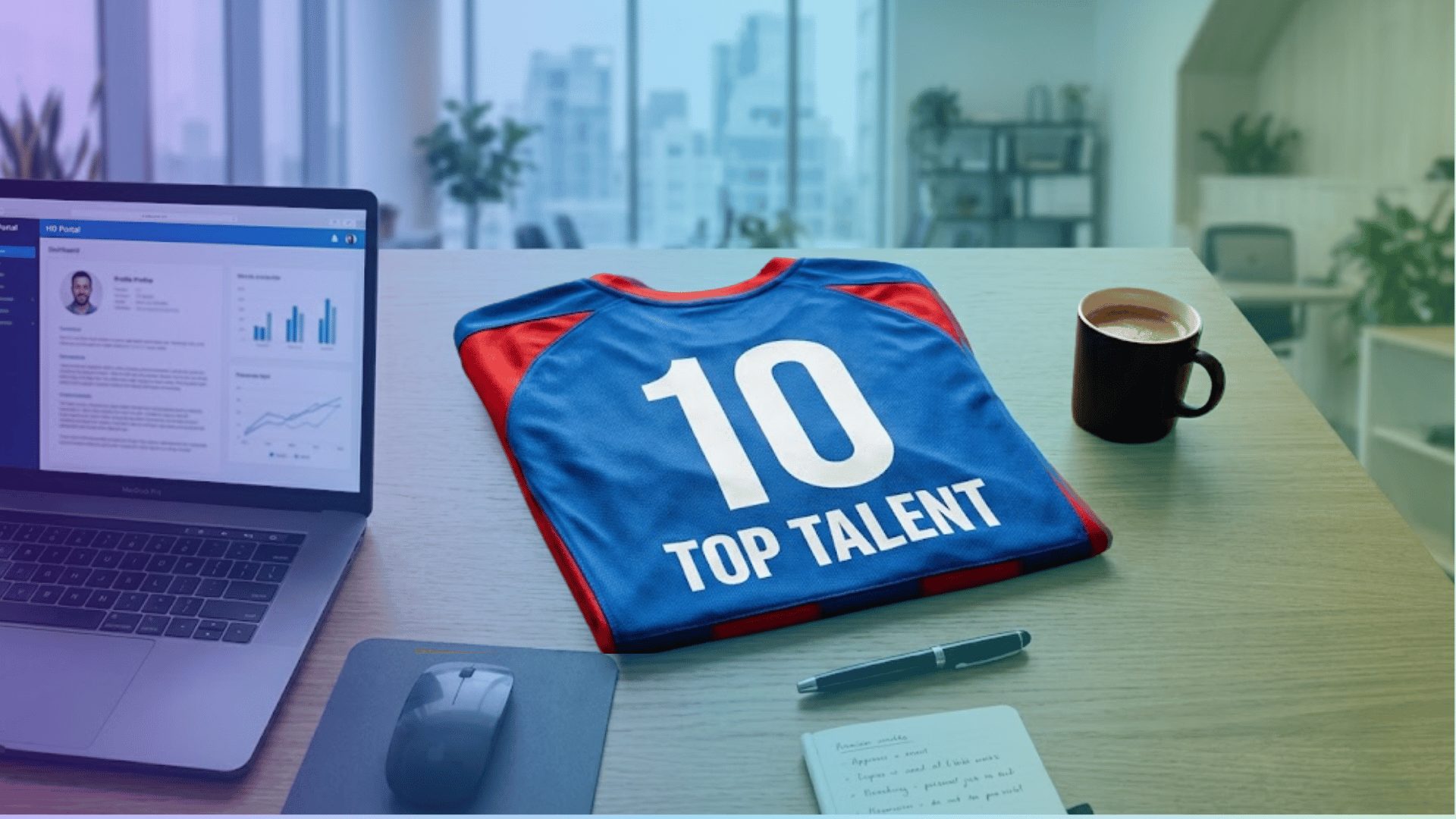
Key Predict’s Predictive Model: Identify the Skills That Predict Success



Many HR leaders are currently facing the same situation: applications are coming in, interviews are going well, and yet something still feels off. The position remains open for too long. Or worse, the person hired fails to meet expectations within the first six months, without any clear explanation as to why.
The usual reflex is to blame the market. Not enough strong profiles. Increased competition for talent. A shrinking candidate pool. This is not wrong. But it is rarely the whole truth.
What is not said often enough: the problem usually starts before the first CV
When a hiring decision fails, we tend to analyse what happened after the decision was made. Rarely what happened before. Yet this is where the essentials are decided.
The question “what candidate are we looking for?” seems obvious. In practice, it hides a real difficulty: defining what truly enables someone to succeed in this role, within this team, and in this specific context. Not what feels reassuring. Not what resembles previous profiles. What predicts performance.
Most competency frameworks used in recruitment answer a different question: what does someone in this type of role look like? That is a description, not a prediction. And the difference is significant.
Moving from descriptive criteria to predictive criteria
The right question is not “has this candidate already done this job?”, but “which behaviours, aptitudes and motivations distinguish people who succeed in this role from those who disengage after six months?”.
This is more of a shift in mindset than a change of tool. It means starting from the expected outcomes of the role, identifying the skills that produce them, and translating each skill into observable behaviours, those that can be assessed consistently, regardless of the evaluator.
Some transferable skills consistently stand out across most contexts: the ability to execute under pressure, learn quickly in a new environment, solve problems methodically, and maintain performance when priorities shift. These are not generic qualities. They are observable, measurable behaviours, and strong predictors of sustainable performance.
Predictive matching: a structured answer to a poorly framed question
This is exactly what predictive matching is designed to address. By cross-referencing a candidate’s profile, personality, cognitive abilities and deeper motivations with the success criteria defined for the role, it provides a far more reliable reading than an unstructured interview or a CV review focused on reassuring signals.
It is not a black box that makes decisions instead of the recruiter. It is a system that structures decision-making, reduces bias, and makes it possible to compare candidates based on what truly matters, not on what is most visible.
Recruitment assessments integrated into this approach are not designed to filter candidates mechanically. They are designed to enrich the decision with objective data on dimensions that interviews do not always capture: how a person reacts under pressure, how they learn, and how they collaborate when situations become more complex.
The Key Predict method: start with success criteria
At Key Predict, the predictive model is based on one structuring principle: first define the success criteria for the role, then assess them using multiple methods in order to establish an overall match with the target position.
The main advantage of this predictive model, compared with a simple evaluation grid, lies in its flexibility: it adapts to your specific requirements and context without requiring you to start from scratch for every recruitment process.
The platform offers ready-to-use role models covering a very wide range of functions and sectors. Most importantly, each model remains editable: HR teams always retain control to adjust the selected skills, their level of importance, and to evolve the model based on feedback from the field.
In practical terms, imagine you are recruiting a product manager for a fast-growing tech marketing team. You do not need to build your framework from scratch. You start from an existing model, adapt it to your priorities by adjusting, for example, learning agility and critical thinking, which are decisive criteria for this profile, and then launch your assessment campaign.
Once the model has been defined, candidates are assessed using a combination of complementary tools. Psychometric assessments covering personality, cognitive abilities and motivations provide standardised scores that are independent of evaluator bias and scientifically validated.
The result: a skills profile for each candidate, with an overall matching score, identified strengths and development areas to explore further. A clear reading that enables candidates to be compared using objective criteria, and decisions to be made based on converging data rather than a general impression.
A model that learns and improves
The value of a predictive model does not stop at hiring. By measuring actual performance at three and six months through a standardised professional interview and, for collaborative roles, a 360° assessment, it becomes possible to validate the predictive quality of the model, adjust weightings according to observed results, and train managers on the profiles that work best in their specific context.
For an SME, avoiding a single hiring mistake represents a real saving of between €30,000 and €80,000 in direct and indirect costs. But beyond the figure itself, it is the quality of the teams that is built differently when decisions are based on converging data rather than a general impression.
The talent market is indeed under pressure. But before concluding that strong profiles are rare, it is worth making sure that you know exactly what you are looking for, and that you have the tools to recognise it when it appears.
Would you like to see the Key Predict predictive model in action and understand how to configure it for your roles?
→ Book my personalised demo